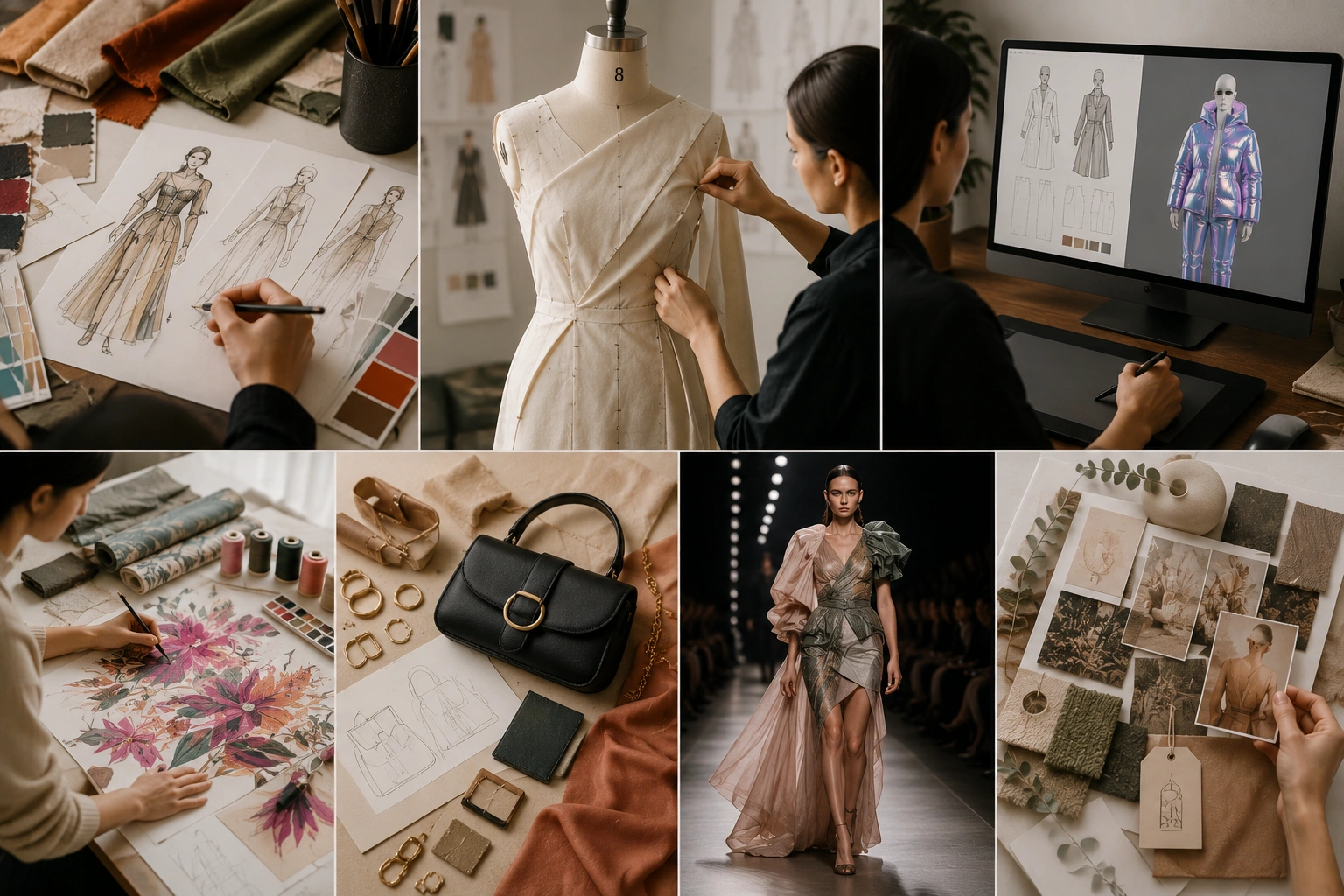
Most students enter a fashion design programme with a broad idea of what they want to do, and a much clearer one by the time they finish. That shift usually happens because of specialisation. A degree gives you a shared foundation in the first year or two, and then asks you to choose a direction that shapes your projects, your portfolio and eventually your career. This guide explains the main fashion design specializations available, what each involves, and how to work out which one fits you.
Why Fashion Design Specializations Matter
Fashion is not a single job. The person who develops a print, the person who drafts the pattern, the person who decides what a retailer buys and the person who styles the campaign are all working in fashion, but their daily work has very little in common. Specialisation is how a degree acknowledges that reality.
Choosing a direction does not narrow your options as much as students often fear. It gives your portfolio a recognisable point of view, which is what employers actually respond to. A portfolio that shows twenty unrelated pieces reads as undecided; one that shows a coherent body of work with a clear strength reads as ready to hire. The foundation you build early stays with you regardless of the specialisation you pick.
Fashion Design Subjects You Study Before Specialising
- Design fundamentals, elements and principles of composition
- Fashion illustration and rendering
- Textile studies, fibre and fabric behaviour
- Pattern making, draping and garment construction
- History of fashion and costume
- Colour theory and trend research
- Computer-aided design and digital presentation
These fashion design subjects form the common base of almost every serious programme. At NIF Global Kondhwa, the emphasis is on introducing these through practice rather than lecture alone, with students starting hands-on design tasks early and theory taught alongside project work rather than separately from it. Workshops in areas such as tie and dye, fabric manipulation, texture development and surface art give students direct contact with techniques that later feed into specialised work.
The Main Fashion Design Specializations
Specialisations vary in name from institute to institute, but the underlying areas are broadly consistent. The table below summarises the main ones, what each focuses on, and the roles they typically lead to.
| Specialisation | What You Focus On | Common Career Roles |
|---|---|---|
| Apparel & Garment Design | Pattern making, construction, silhouettes, collection development | Fashion Designer, Assistant Designer, Product Developer |
| Textile & Surface Design | Weaves, prints, dyeing, embroidery, fabric manipulation | Textile Designer, Print Designer, Surface Developer |
| Fashion Styling & Communication | Styling, visual storytelling, editorial and brand imagery | Fashion Stylist, Creative Director, Content Specialist |
| Luxury & Couture Design | Handwork, draping, bridal and occasion wear, craft techniques | Couture Designer, Bridal Designer, Atelier Designer |
| Fashion Business & Merchandising | Buying, range planning, costing, retail and brand management | Merchandiser, Fashion Buyer, Retail Manager |
| Accessory & Footwear Design | Bags, jewellery, footwear, materials and hardware | Accessory Designer, Footwear Designer, Product Designer |
Apparel and garment design remains the most chosen route, and is the closest to what most people picture when they think of a fashion designer. Textile and surface design suits students drawn to material and technique rather than silhouette, and has strong relevance in India given the depth of the country's weaving, printing and embroidery traditions.
Styling and fashion communication attract students who think visually but prefer building narratives to constructing garments. Luxury and couture work rewards patience and craft skill, particularly in the Indian occasion-wear and bridal market, which remains one of the most commercially significant segments in the country. Merchandising and fashion business suit students who enjoy the commercial mechanics of the industry, and often offer the most structured entry-level roles. Accessory and footwear design is smaller but underserved, which can work in a graduate's favour.
How Specialisation Works Within Fashion Design Programs
Different fashion design programs handle specialisation differently. Degree-level courses such as BDes and BVoc usually keep the first year broad, introduce specialisation options from the second year, and dedicate the final year to a graduation collection or capstone project in the chosen area. Diploma and certificate programmes are shorter and tend to concentrate on one applied area from the start, which suits students who already know their direction or who want to add a specific skill.
The fashion design programmes at NIF Global Kondhwa follow a paced structure that moves from basics to advanced concepts, giving students time to practise before committing to a direction. Because the institute also runs interior design and product design and design management programmes, students get exposure to how design thinking works across disciplines, which is useful for anyone considering the business or communication side of fashion.
Fashion Design Career Options After Specialising
Fashion design career options are broader than the designer title alone. Apparel specialists move into design studios, export houses and buying offices. Textile specialists work with mills, print studios, craft clusters and home furnishing brands. Styling graduates find work in editorial, advertising, film and increasingly in digital content, where demand has grown considerably. Merchandising graduates enter retail chains and e-commerce brands, often with clearer progression paths than pure design roles.
Location matters too. Pune sits within a wider design and manufacturing corridor with access to Mumbai's fashion, film and retail industries, which affects the kind of internships and entry-level work students can realistically reach. Industry exposure through platforms associated with the NIF Global network, including New York, London, Dubai and Lakmé Fashion Weeks, gives students visibility into how professional collections are produced and presented.
How NIF Global Kondhwa Supports Specialisation Choices
Choosing a direction is easier when someone is watching your work closely enough to see where your strengths lie. NIF Global Kondhwa, formerly known as NIFD Global, has been running design education in Pune for more than 17 years, and its approach is built around mentorship and continuous feedback rather than one-off assessment. Strengths are identified early and developed over time, with progress tracked through regular work.
Career guidance is handled the same way, with an emphasis on realistic direction rather than inflated promises, and students receive placement assistance alongside industry workshops and expert-led sessions. Courses are approved by NSDC and Skill India. Students who want to discuss which specialisation suits them can reach out to the admissions team or visit the Kondhwa campus to see the studios and student work in person.
How to Choose the Right Specialisation
The most reliable indicator is which assignments you return to voluntarily. Students who redo a print until it works are usually textile people; those who keep adjusting a fit are apparel people; those who enjoy putting the shoot together more than making the garment are stylists. Pay attention to that pattern during your foundation year rather than choosing on the basis of which specialisation sounds most prestigious.
It also helps to speak to people already working in each area, and to ask what an average week actually looks like rather than what the highlights are. Faculty mentors, alumni and visiting professionals are useful here. A specialisation chosen because the work suits you tends to hold up better over a career than one chosen for its title.
Frequently Asked Questions
What are the main fashion design specializations?
The main fashion design specializations include apparel and garment design, textile and surface design, fashion styling and communication, luxury and couture design, fashion business and merchandising, and accessory and footwear design. Availability varies between institutes and programme levels.
When do students choose a specialisation during a degree?
In most degree-level fashion design programs, the first year covers common foundation subjects, specialisation options open up from the second year, and the final year is dedicated to a graduation collection or capstone project in the chosen area.
What subjects are covered in fashion designing courses?
Core fashion design subjects include design fundamentals, illustration, textile studies, pattern making, draping, garment construction, fashion history, colour theory, trend research and computer-aided design. Specialisation subjects are layered on top of this foundation.
Does specialising limit fashion design career options?
Not usually. The shared foundation remains applicable across areas, and specialisation mainly gives a portfolio a clear direction, which employers respond to. Many designers also shift between related areas over the course of a career.
Which specialisations can I study at NIF Global Kondhwa?
NIF Global Kondhwa offers fashion design programmes alongside interior design and product design and design management, with courses approved by NSDC and Skill India. Prospective students can contact the admissions team or visit the Kondhwa campus for current programme and specialisation details.