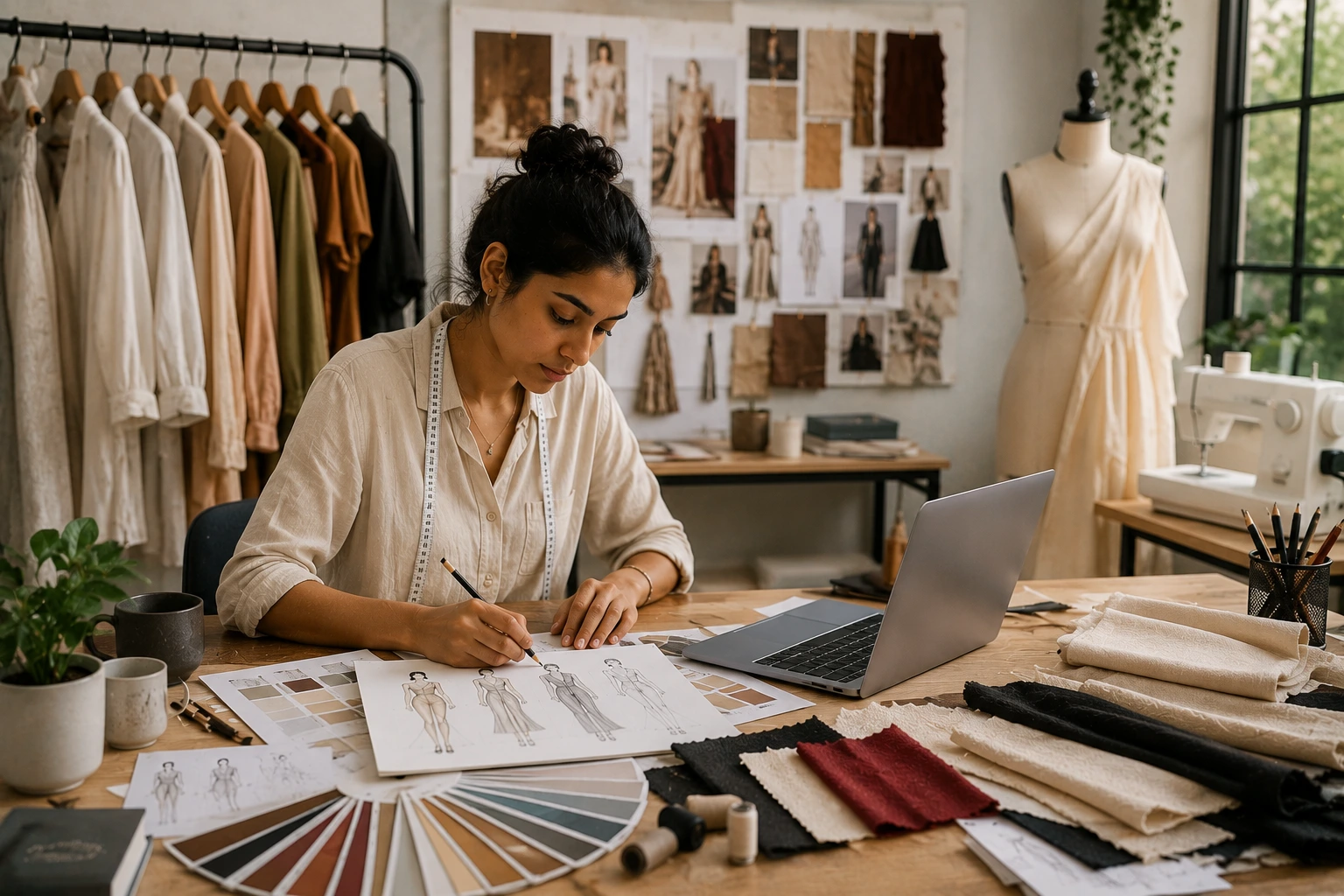
Starting a fashion label is a goal many design graduates aspire to, but turning that vision into a functioning brand requires more than creativity. It involves planning, sourcing, legal compliance, and a clear understanding of the market. For graduates coming out of a structured fashion design course, the technical and creative foundation is already in place. What follows is a practical roadmap to take that foundation and build it into a real label.
What Does It Take to Start a Fashion Label?
A successful fashion label combines design sensibility with business fundamentals. Beyond sketching and garment construction, founders need to think about sourcing, production, pricing, branding, and how to reach customers. Graduates often have the creative and technical skills covered, but the business side, registration, funding, and operations, is where most of the early learning happens.
Steps to Start a Fashion Brand
Starting a fashion brand generally follows a structured sequence, and each step builds on the one before it, so skipping early planning often creates problems later in production or sales.
- Define a clear design identity and target audience — decide who the brand is for, what aesthetic it represents, and what price segment it fits into, setting the direction for everything that follows.
- Develop a small initial collection — rather than designing dozens of pieces, most new labels start with a focused range of 8-12 pieces that clearly represent the brand's identity without overextending resources.
- Source fabrics and production partners — identify fabric suppliers, finalize trims and materials, and find tailors or manufacturing units that can handle sample development and small-batch production.
- Register the business and brand name — choose a legal structure, register for GST, and optionally protect the brand name through trademark registration before scaling visibility.
- Set up sales channels — depending on where the target audience shops, this could include an online store, marketplace listings, social media storefronts, or local retail tie-ups.
- Build a marketing approach — tie everything together with consistent visuals, brand messaging, and a content strategy that introduces the label and supports the first collection's launch.
Defining Your Niche and Vision
Before designing a single piece, it helps to define who the brand is for and what makes it different. This includes identifying a target customer group, a price segment, and a design aesthetic that runs consistently across the collection. A clear niche, whether it's sustainable fabrics, occasion wear, or minimalist everyday clothing, makes it easier to make decisions later, from fabric choices to marketing messaging.
Sourcing Materials and Manufacturing
Once the design direction is set, the next step is sourcing fabrics, trims, and finding production partners. Many new labels start by working with small-scale tailors or local manufacturing units before scaling to larger production houses. Sampling is an important phase here, creating prototype garments to test fit, fabric behavior, and finishing before committing to bulk production. Building relationships with reliable suppliers early on helps avoid delays and quality issues down the line.
How to Register a Clothing Brand in India
Registering a clothing brand involves a few key steps. First, choosing a business structure, commonly a sole proprietorship, partnership, or private limited company, depending on the scale and ownership plans. This is followed by registering the business name and obtaining a GST registration, which is required for selling goods legally in India. Trademark registration for the brand name and logo is optional but recommended early on, as it protects the brand identity as the business grows and prevents others from using a similar name.
The table below summarizes the basic registration requirements for starting a clothing brand in India.
| Requirement | Purpose |
|---|---|
| Business Structure (Proprietorship / Partnership / Pvt Ltd) | Establishes the legal ownership, liability, and operational framework of the business. |
| GST Registration | Required for legally selling products, issuing tax invoices, and collecting GST. |
| Trademark Registration | Protects the brand name, logo, and identity from unauthorized use or infringement. |
| Business Bank Account | Keeps business transactions separate from personal finances and improves financial management. |
How to Launch a Clothing Brand in India
Launching involves bringing the first collection to market. This typically starts with a small, focused range rather than a large catalog, allowing the brand to test customer response without overcommitting on inventory. Pricing should account for production costs, margins, and the target market's expectations. Sales channels can include an online store, marketplaces, social media platforms, or pop-up events and local retail partnerships. A simple but consistent brand presence, visuals, messaging, and packaging, helps establish credibility from the start.
Funding and Budgeting for a New Label
Most new labels begin with limited budgets, often self-funded or bootstrapped using personal savings. Initial costs typically cover sampling, small-batch production, basic branding (logo, packaging), and setting up an online presence. As the brand grows, founders may explore options like small business loans, grants for creative entrepreneurs, or external investment, depending on scale and growth plans. Careful budgeting in the early stages helps avoid overextending before the brand has established demand.
Career Path: From Graduate to Fashion Entrepreneur
For graduates of fashion design programs that prepare students for entrepreneurship, starting a label is a natural extension of skills built during the course, design thinking, portfolio development, and understanding garment construction and materials. These foundations translate directly into building a brand: the same design process used for academic projects applies to developing a commercial collection, and portfolio-building skills carry over into presenting the brand to customers and buyers.
In practice, many graduates start small while still building their network and reputation, often taking on freelance projects, styling work, or part-time roles alongside early label development. This dual approach helps cover initial costs and provides real-world exposure to client expectations, production timelines, and market trends, all of which inform decisions as the label grows. Over time, as the brand gains traction, founders can shift focus more fully toward their own label.
Starting a fashion label is rarely a linear process, and most founders adjust their approach as they learn what works for their specific niche and market. What matters most in the early stages is building a strong foundation: a clear design identity, reliable sourcing, proper registration, and a focused initial collection. With these basics in place, graduates are well-positioned to grow their label steadily, whether that means expanding their product range, scaling production, or exploring new sales channels over time.
Frequently Asked Questions
What are the first steps to start a fashion brand?
The first steps include defining a clear design niche and target audience, developing a small initial collection, and identifying fabric sources and production partners. Early planning around these areas makes later steps, like registration and launch, more straightforward and helps avoid costly changes once production begins.
How do I register a clothing brand in India?
Registering a clothing brand involves choosing a business structure (proprietorship, partnership, or private limited), registering the business name, and obtaining GST registration for legal sales. Trademark registration for the brand name and logo is optional but recommended to protect the brand identity as it grows.
How much money is needed to start a fashion label?
Costs vary widely depending on scale, but most new labels start with limited budgets covering sampling, small-batch production, basic branding, and an online presence. Many founders bootstrap initially, using personal savings, before exploring loans or external funding as the brand grows.
Can a fashion design graduate start their own brand without industry experience?
Yes, many graduates start their own labels directly after completing their courses. The design, technical, and portfolio-building skills gained during a fashion design program provide a strong foundation, though learning business operations, sourcing, and registration happens largely through hands-on experience.
What is the best way to launch a clothing brand in India?
A focused approach works best, starting with a small, well-defined collection rather than a large catalog. This allows the brand to test customer response, manage production more easily, and build a consistent brand identity across online and offline sales channels before scaling up.