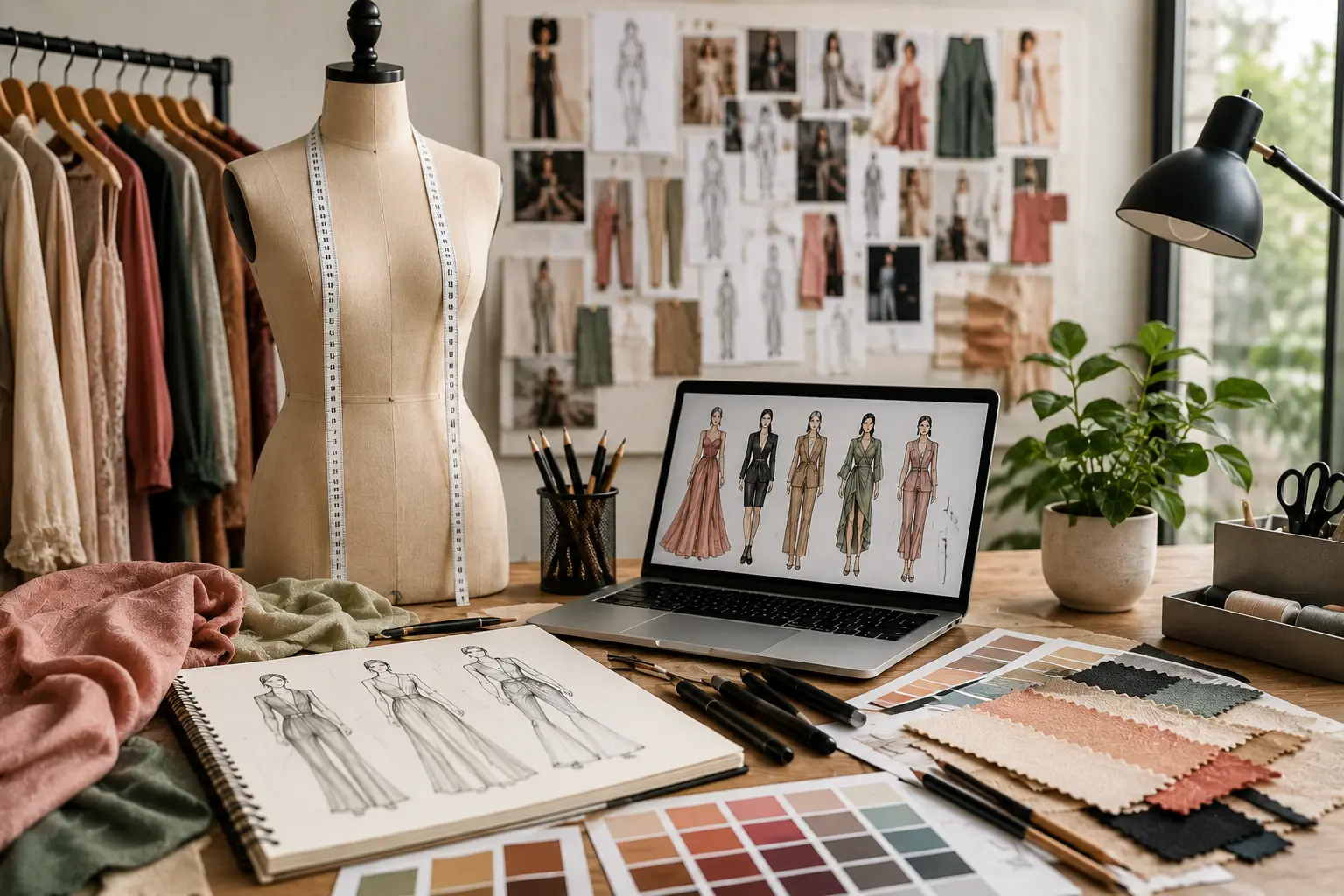
Fashion design is often seen as a glamorous but uncertain career path, leaving many students and parents wondering whether it's a practical choice. Looking at actual salary data, career scope, and the experiences of students who've gone through design programs can help answer this question more clearly than assumptions alone.
Is Fashion Design a Good Career Choice?
Fashion design can be a good career choice for individuals who combine creativity with technical skill and business awareness. The industry offers diverse roles, from design and styling to merchandising and entrepreneurship, so career satisfaction often depends on which path a graduate chooses to pursue. Like most creative fields, early-career roles may offer modest pay, but opportunities grow significantly with experience, specialization, and skill development.
Fashion Designer Salary in India
Salary data for fashion designers in India varies depending on the source, role, and experience level, but some patterns are consistent across reports. Entry-level fashion designers typically earn between ₹15,000 and ₹25,000 per month, while mid-level professionals with a few years of experience often earn in the range of ₹25,000 to ₹60,000 per month. Senior designers, creative directors, or those running their own labels can earn significantly more, with some reports citing annual packages well above ₹10 lakhs for experienced professionals.
Average Salary of Fashion Designer in India
When averaged across different data sources, the typical annual salary for a fashion designer in India falls somewhere between ₹3.5 lakhs and ₹8 lakhs, depending on the city, employer, and specialization. Metro cities like Mumbai, Delhi, and Bangalore tend to offer higher pay due to the concentration of fashion brands, export houses, and styling opportunities in these locations. The wide range reflects the diversity of roles within the field, from in-house designer positions to freelance and entrepreneurial work.
The table below summarizes salary ranges at different experience levels based on available industry data.
| Experience Level | Typical Monthly Salary Range |
|---|---|
| Entry-Level (0–2 Years) | ₹15,000 – ₹25,000 |
| Mid-Level (2–5 Years) | ₹25,000 – ₹60,000 |
| Senior-Level (5+ Years) | ₹60,000 – ₹1,50,000+ |
| Entrepreneurs / Brand Owners | Income varies significantly based on brand growth, sales, and business performance. |
Fashion Designing Career Scope in India
The scope of fashion design as a career in India extends well beyond designing clothes. Graduates can work as designers for fashion brands, stylists for films, television, or personal clients, merchandisers managing product lines for retail companies, or textile and pattern specialists. The growth of e-commerce and direct-to-consumer brands has also created new opportunities for designers to work with smaller, digitally-native labels or start their own ventures. As India's fashion and retail industry continues to expand, the demand for trained design professionals across these varied roles is expected to remain steady.
Career Opportunities in Fashion Designing
Career opportunities in fashion designing span both employment and self-employment paths. On the employment side, graduates can work with established fashion houses, export units, retail brands, or media and entertainment companies as stylists. On the self-employment side, many designers eventually start their own labels, work as freelance designers for multiple clients, or offer styling and consultation services. The flexibility to move between employed roles and independent work over the course of a career is one of the field's distinguishing features.
Career Options in Fashion Designing
Within fashion design, common career options include fashion designer, fashion stylist, merchandiser, textile designer, and pattern maker. Beyond these core roles, some graduates move into related areas such as costume design for film and television, visual merchandising for retail stores, or fashion journalism and content creation. The breadth of these options means that a fashion design education can lead to multiple career directions depending on a graduate's interests and strengths.
What Do Fashion Design Students Say About the Field?
Student experiences in fashion design programs often highlight a few recurring themes. Many describe the field as demanding but rewarding, requiring consistent practice to develop technical skills like sketching, draping, and garment construction. Hands-on projects, fashion shows, and workshops are frequently mentioned as highlights that build both confidence and practical understanding of the industry. Students also commonly note that exposure to real industry processes, such as working with fabrics, understanding production timelines, and presenting work professionally, helps bridge the gap between classroom learning and actual job expectations. For many, the early stages of the course focus on building fundamentals, with more specialized or career-oriented learning coming in later years.
A typical journey through a fashion design program often starts with foundational exercises, sketching basic silhouettes, understanding fabric drape, and practicing simple stitching techniques, before moving into more independent design work. By the later stages of the course, students usually work on full collections, from initial concept and mood boards to final garment construction and presentation. Many also get the chance to showcase this work through college fashion shows or exhibitions, which often becomes a key portfolio piece when applying for internships or entry-level roles after graduation.
Factors That Influence Success in Fashion Design Careers
Several factors influence how well a fashion design career works out for an individual. A strong portfolio built during education plays a major role in securing internships and early job opportunities. Practical skills, including software proficiency, pattern making, and garment construction, are often valued as much as creative ability. Networking and industry exposure during the course, such as participation in fashion shows or workshops, can also open doors to opportunities that aren't always advertised publicly. Finally, willingness to start in entry-level roles and build experience gradually tends to correlate with stronger long-term outcomes in the field.
Taken together, the data suggests that fashion design in India offers a realistic and varied career path, though success often depends on how graduates apply their skills. Entry-level salaries may seem modest compared to some other fields, but the range of roles, design, styling, merchandising, and entrepreneurship, means there isn't a single career trajectory to measure against. For students willing to build a strong portfolio, gain practical exposure, and stay open to different roles early on, fashion design can offer steady growth and long-term opportunities in a growing industry.
Frequently Asked Questions
Is fashion design a good career choice in India?
Fashion design can be a good career choice for those who enjoy combining creativity with technical and business skills. While entry-level pay may be modest, the field offers diverse roles and strong growth potential with experience, specialization, or entrepreneurship over time.
What is the average salary of a fashion designer in India?
The average salary for a fashion designer in India typically ranges between ₹3.5 lakhs and ₹8 lakhs per year, depending on experience, location, and role. Entry-level positions usually start lower, with salaries increasing significantly for mid-level and senior professionals.
What is the career scope for fashion designing in India?
Fashion designing offers a wide career scope, including roles in design, styling, merchandising, textile work, and entrepreneurship. With the growth of e-commerce and direct-to-consumer brands, opportunities have expanded beyond traditional fashion houses to digital and independent ventures.
What career options are available after a fashion design course?
Common career options include fashion designer, stylist, merchandiser, textile designer, and pattern maker. Graduates can also explore related fields like costume design, visual merchandising, or start their own fashion labels.
Do fashion design students find the course practical and useful?
Many students describe fashion design courses as practical, with hands-on projects, workshops, and exposure to real industry processes. Building a strong portfolio and gaining practical skills during the course are commonly seen as key factors for career readiness.